Bophut & Fisherman’s Village: Why Investors Are Choosing Koh Samui’s Most Cosmopolitan Area
Bophut & Fisherman’s Village: Why Investors Are Choosing Koh Samui’s Most Cosmopolitan Area
There is a place on Koh Samui’s north coast where Chinese shophouses glow amber at dusk, where the smell of grilled seafood drifts from open-air terraces, and where a Friday evening street market draws Europeans, Australians, Russians, and Thais in equal measure. That place is Bophut — and increasingly, it is the first address sophisticated international investors ask about when they come to Samui. Bophut is not the island’s loudest neighbourhood, nor its cheapest. It is, by most measures, its most complete. Within a single 10-minute radius you have a heritage walking street, a calm beach, two international hospitals, multiple international schools, a 24-hour Tesco Lotus and Makro, and an airport that connects to Bangkok a dozen times daily. No other area on Koh Samui offers that combination of culture, infrastructure, and lifestyle at the same density — which is precisely why Bophut consistently draws the highest concentration of international buyers and long-term residents on the island. This guide, produced by Samui Property Group, provides a frank, data-driven assessment of the Bophut property market as it stands in 2025–2026: what you can buy, what it costs, what it earns, and what risks to weigh carefully before committing.
Geography and Character: Where Bophut Sits on the Island
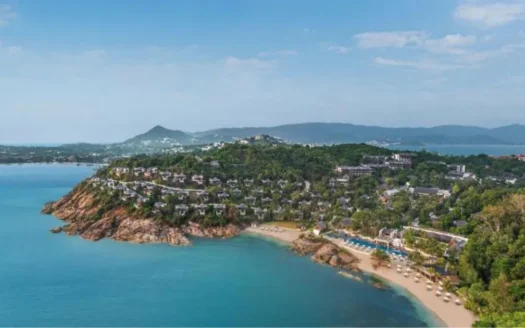
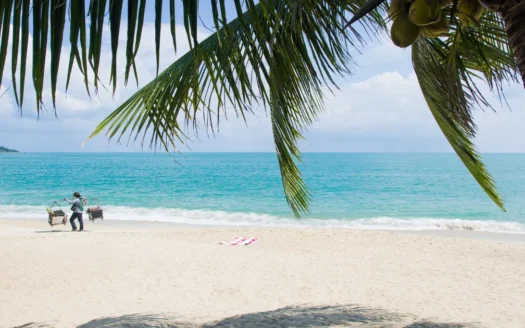
Bophut occupies a 7-kilometre stretch of Koh Samui’s north coast, roughly between the airport in the east and the quieter Maenam district to the west. Its position is one of its greatest commercial assets. Samui International Airport — owned and operated by Bangkok Airways — sits just 10–15 minutes by road, meaning guests arriving from Bangkok, Singapore, or Hong Kong can reach a villa in Bophut Hills before their luggage carousel has even finished moving. The geography divides naturally into three elevations:- The beachfront and flat land, running along Route 4169 (the island’s ring road), where the Fisherman’s Village strip and a handful of boutique hotels occupy the seafront. Bophut Beach is a calm, north-facing bay — quieter than Chaweng, with gentle water ideal for families.
- The mid-slopes, where most residential and condominium development sits, within walking distance or a short ride to the village.
- Bophut Hills, rising sharply behind the flat land, offering panoramic Gulf of Thailand views — some capturing both Bophut Bay and Chaweng Bay simultaneously — at elevations high enough to catch sea breezes and escape flooding.
The Fisherman’s Village Effect: What Makes Bophut Different
Every area on Koh Samui has a beach. Not every area has a reason to stay. Fisherman’s Village is a preserved stretch of Chinese-Thai shophouses along Bophut’s beachfront — historically a fishing community, now converted into a walkable strip of boutique restaurants, wine bars, galleries, Thai craft shops, and beach-facing cocktail terraces. The architecture is low-rise and heritage-protected in character, preventing the kind of corporate hotel sprawl that has altered Chaweng irreversibly. The village operates as a walking street from 6 PM to 10 PM daily. The Friday Night Market — one of the island’s premier weekly events — runs the full length of Beach Road from 5 PM to 11 PM, drawing thousands of visitors with street food, handicrafts, live music, and fire shows. For investors focused on short-term rental demand, this is a structural advantage: the Friday market alone generates consistent peak-evening footfall that keeps the area busy year-round. The expat community here skews educated, international, and long-term. Bophut is widely described as the expat heartland of Koh Samui — a label earned by its proximity to international schools, its sophisticated dining scene, and the fact that the village’s walkable format suits families and professionals who want daily life to feel less dependent on a car. Conversations at a Bophut breakfast spot are as likely to be in French, German, or Russian as in Thai or English. That cosmopolitan density is neither accidental nor easily replicated — it compounds over years, attracting more of the same. This is the dynamic that distinguishes Bophut from beach-focused areas like Lamai or Bang Por. Seasonal sun-seekers come and go. But the village’s year-round hospitality ecosystem — the galleries, the fine dining, the wine bars, the wellness studios — anchors a resident clientele that fills rental properties during the shoulders of the season when purely tourism-dependent areas go quiet.Property Market Overview: What You Can Buy and What It Costs
Bophut’s property market spans a wider price band than any other area on the island, from accessible entry-level condominiums to ultra-luxury hillside estates. The following data reflects market intelligence as of 2025.Villa Price Ranges (2025)
According to the C9 Hotelworks June 2025 Samui Property Market Review, the Bophut area covers a broad range of villa price points, with the most active segment centred on three-bedroom properties. The typical villa purchase price range in Bophut runs from THB 12 million to THB 35 million (~USD 325K–940K), with premium sea-view and beachfront properties commanding considerably more. The following breakdown reflects current market conditions:| Property Type | Typical Price Range (THB) | Notes |
|---|---|---|
| 2-Bedroom Villa | ฿8M – ฿12M | Garden/hillside, entry investment |
| 3-Bedroom Villa | ฿12M – ฿25M | Most active segment; sea-view commands premium |
| 4-Bedroom Villa | ฿23M – ฿40M | Bophut Hills panoramic-view tier |
| 5+ Bedroom Villa / Estate | ฿45M – ฿200M+ | Luxury estates; Samujana Hills tier |
| Beachfront Villa (3–4 bed) | ฿55M – ฿85M+ | Rare; premium commanded for direct beach access |
| Condominium / Apartment | ฿5M – ฿15M | Best entry point for foreign freehold ownership |
Condominiums and Entry-Level Properties
The condominium segment — the most accessible route to freehold foreign ownership in Thailand — offers meaningful entry points in Bophut. The C9 Hotelworks June 2025 Property Market Review places the median condominium price per square metre at THB 88,500 islandwide. One-bedroom units in the 40–70 sqm range have a median sale price of approximately THB 3.5 million, while two-bedroom units (80–110 sqm) sit at a median of THB 7.2 million — an important benchmark when evaluating off-plan pricing. Pool-access apartments in Bophut’s most desirable positions generally sit in the THB 12M–15M range.The Investment Case: Rental Yields and Year-Round Demand
Short-Term Rental Performance
Short-term holiday rentals in Bophut generate gross yields broadly in the range of 6%–10% annually, depending on property type, location, management quality, and bedroom count. Properties in prime positions — sea-view hillside villas and near-Fisherman’s Village homes — can regularly reach the upper band of this range, with the best-managed assets in Bophut Hills achieving strong performance during peak demand cycles. Koh Samui’s short-term rental market as a whole performed strongly in the 12 months to January 2026. Airbtics reports a median annual revenue of THB 1.26 million per active listing, with a median island-wide occupancy rate of 66% and a median nightly rate of THB 5,188 — figures that represent a 10% year-on-year uplift. AirROI’s 2026 data shows typical properties achieving median occupancy of around 43% island-wide, with top-quartile properties sustaining 70%+ occupancy — a performance tier Bophut’s premium villa market is well-positioned to reach given the village’s consistent year-round footfall.| Rental Performance Tier | Occupancy Rate | Avg. Nightly Rate (THB) |
|---|---|---|
| Top 10% (Best-in-Class) | 86%+ | THB ~24,200+ |
| Top 25% (Strong Performers) | 70%+ | THB ~13,200+ |
| Median (Typical Market) | 43% | THB ~6,700 |
| Bottom 25% | ~22% | THB ~2,800 |
Data methodology note: AirROI figures reflect Airbnb-channel listings only. All-channel occupancy — including Booking.com, Agoda, and direct bookings — is materially higher. C9 Hotelworks reports island-wide villa occupancy of 71.5% in Q1 2025 across all booking channels, up 5.7 percentage points year-on-year. The AirROI data remains valuable for submarket benchmarking and rate comparison, but the Airbnb-channel occupancy rates above should not be read as a ceiling on achievable performance.During peak season (December–April), luxury villa nightly rates across the island’s premium tier can range from THB 14,400 to THB 54,000 per night and above. In Bophut, the combination of Fisherman’s Village proximity and sea-view settings allows well-positioned villas to achieve the upper bands of this range.
Why Bophut’s Demand Is Structurally More Consistent
The single greatest investment argument for Bophut over purely beach-facing areas is the village itself. Chaweng draws peak-season party tourism. Lamai draws sun-seekers. Bophut draws a genuinely international, higher-spending demographic that is motivated as much by the restaurant and lifestyle scene as by the beach. That demographic travels year-round. According to the C9 Hotelworks Samui Hotel & Tourism Market Review June 2025, hotel ADR on Koh Samui rose 9% year-on-year in 2024 and continued climbing through early 2025, with ADR in April 2025 registering a 21% year-on-year spike. Overall hotel occupancy rebounded 12% in 2024. The independent villa rental market saw a 34% year-on-year increase in supply by January 2025, yet occupancy in the independent villa segment rose by 5.7 percentage points to 71.5% over the same period — a clear signal of demand absorbing new supply rather than being diluted by it. These figures are corroborated by reporting from Breaking Travel News on the C9 Hotelworks findings. Long-term rental demand in Bophut adds a further layer of yield support. The proximity to international schools and Bangkok Hospital Samui makes Bophut the default choice for corporate relocations and family expats, who typically sign 12-month leases at THB 40,000–120,000 per month for quality three- and four-bedroom villas. This provides a reliable floor on income during the quieter months (September–November).Infrastructure and Development: The Structural Tailwinds
Infrastructure quality is the sleeper advantage of a Bophut investment. Several major developments underline the long-term appreciation case for the island, and the north-coast corridor benefits most directly.Airport Expansion (2025–2027)
Bangkok Airways has committed THB 1.5 billion to expand Koh Samui International Airport, with construction commencing in 2025 and completion targeted by 2027. The expansion includes increasing the number of gates from seven to eleven, installing ten new check-in counters, and more than doubling the commercial area from 1,800 m² to 4,000 m². The airline projects passenger throughput to double from approximately 2 million annually to 4 million by 2027. For Bophut, located 10–15 minutes from the airport, this translates directly into increased arrivals and improved accessibility for rental guests.Koh Samui Mainland Expressway (2029–2033)
The Expressway Authority of Thailand (EXAT) has finalised feasibility studies for a 74-billion-baht, 37.41-kilometre elevated expressway linking Koh Samui to the southern mainland, with construction scheduled to begin in 2029 and the route expected to open by the end of 2033. This transformational project would reduce mainland-to-island travel time from two hours by ferry to approximately 20 minutes, fundamentally altering the island’s accessibility and opening new markets of visitors and residents who currently bypass Samui due to logistical complexity.Cruise Terminal (2029–2032)
A cruise terminal is planned for the island, scheduled for completion by 2032, with construction commencing in 2029. The terminal is designed to accommodate 120 cruise landings and 180,000 visitors annually upon completion. Koh Samui already ranked among Thailand’s top three cruise ports, welcoming 50 cruise ships and nearly 95,000 passengers in 2024 alone — nearly double the 2023 figures, according to the C9 Hotelworks Samui Hotel & Tourism Market Review.Residential Development Activity
According to C9 Hotelworks, Koh Samui’s primary residential market comprises 2,882 units across 117 projects with a total market value of THB 30.3 billion. The Bophut corridor — defined as encompassing key areas including Chaweng Beach and the vicinity of Samui Airport — accounts for 70% of primary market supply. New large-scale condominium projects including Anava Samui (564 units) and Wing Samui (533 units) reflect the market’s evolution toward higher-density resort-style product, while the established villa market continues to attract buyers at both the mid-market and ultra-luxury levels.Daily Amenities and Convenience Infrastructure
For residents and renters, Bophut’s daily-life infrastructure is arguably the island’s best. Within 10 minutes of Fisherman’s Village lie: Tesco Lotus (24-hour), Makro wholesale, the island’s largest concentration of international restaurants and cafés, Bangkok Hospital Samui (located in Bophut itself, at 57 Moo 3, Thaweerat Phakdee Road), and Thai International Hospital in nearby Chaweng. The zone is also home to PanyaDee, The British International School of Samui, and Oonrak Koh Samui School — both located in Bophut — alongside the International School of Samui (ISS), positioned in Chaweng and accessible within minutes.Lifestyle Amenities: Why People Stay
The decision to invest is rarely about yield alone. In Bophut’s case, the lifestyle dimension is part of the investment thesis — because lifestyle quality drives occupancy. Dining and hospitality: Fisherman’s Village houses some of the island’s most celebrated dining — from long-established beachfront Thai restaurants to European wine bistros, Japanese omakase counters, and craft cocktail bars. The Friday Night Market provides a weekly social anchor that keeps the area animated even outside the high season. Wellness and fitness: The north-coast corridor has developed into Koh Samui’s wellness hub, with a density of yoga studios, Muay Thai gyms, pilates studios, and wellness retreats that rival dedicated resort destinations. This aligns well with Koh Samui’s most valuable rental demographic: health-conscious, higher-spending international travellers seeking active island experiences. International schools: Families selecting Bophut for long-term residence have direct access to PanyaDee (British curriculum, IGCSE and A-Levels) and Oonrak Koh Samui School (bilingual English-Thai curriculum), both situated in Bophut. The International School of Samui (ISS) offers a full British curriculum from nursery through A-levels and is accessible within minutes in neighbouring Chaweng. The presence of these institutions is a significant draw for corporate relocation tenants and explains Bophut’s disproportionately high share of long-term family rentals. Healthcare: Bangkok Hospital Samui is located directly in Bophut, offering the standard of international private healthcare that well-travelled guests expect. For investors, proximity to a hospital of this calibre meaningfully reduces perceived risk for long-stay guests and permanent residents. Water activities and beach access: Bophut Beach is calm, north-facing, and suited to paddleboarding, kayaking, and snorkelling. The nearby Bangrak piers provide ferry connections to Koh Phangan (under an hour) and Koh Tao — popular weekend destinations that enhance the rental appeal of a Bophut base.Types of Investment Opportunity in Bophut
Bophut accommodates a wider range of investment strategies than almost any other Samui area. The following categories represent the main entry points.1. Hillside Sea-View Villas (Bophut Hills)
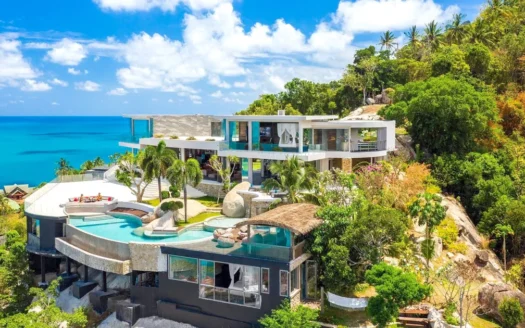
The most sought-after rental asset in the area. Three- and four-bedroom villas with private pools and panoramic Gulf of Thailand views sit in the THB 17M–35M range for well-specified product. These properties achieve the highest nightly rates and, in professionally managed portfolios, the strongest gross yields. Limited prime land and strict height regulations (maximum three storeys / 12 metres on hillsides) constrain new supply, supporting long-term capital values.2. Beachfront and Near-Beach Villas
Rare, expensive, and in consistent demand. True beachfront four-bedroom villas in Bophut start above THB 55 million, with premium examples exceeding THB 80 million. These assets command the highest absolute nightly rates and attract a luxury clientele seeking direct beach access. Capital appreciation is typically the primary return driver rather than yield alone.3. Condominiums and Apartments
The most accessible vehicle for foreign freehold ownership under Thai law (subject to the 49% foreign quota per project). Entry price points from approximately THB 5M–6M for a one-bedroom unit, rising to THB 12M–15M for a two- to three-bedroom pool-access apartment. Yields are typically lower than villas but management overhead is also lower, making this the preferred structure for first-time investors or those building a diversified portfolio.4. Pool Villas in Residential Zones
Three-bedroom freehold pool villas in quieter Bophut residential streets — away from the beachfront noise but within easy distance of the village — represent the strongest value-for-yield entry in the market. Properties in the THB 11M–18M range with good rental management can achieve solid gross yields on conservative occupancy assumptions.5. Land Plots
Bophut Hills retains available land, though prime plots with planning permission and Gulf views are increasingly scarce. For developers and owner-builders, freehold land in Bophut Hills — typically accessed via a Thai limited company structure — offers the highest theoretical return on cost. Expect THB 3M–8M+ per rai for hillside plots with genuine sea views.6. Commercial and Mixed-Use
The Fisherman’s Village strip itself offers very limited inventory of shophouse commercial property. When available, these assets offer both rental income from F&B or retail tenants and strong long-term capital growth underpinned by the village’s established foot traffic.Sub-Areas Within Bophut: Understanding the Differences
Bophut is not a monolithic market. Investors should understand how the three main sub-zones differ in character, price, and rental profile.Fisherman’s Village Proper
The historic beachfront strip. Properties here are extremely limited — mostly boutique hotels, converted shophouses, and a handful of small guesthouses. When available, they command a significant scarcity premium. The rental case is strong (consistent demand, high nightly rates), but entry prices reflect this. The evening walking street creates some ambient noise for immediate beachfront properties — worth noting when evaluating a purchase for personal use.Bophut Hills
The prestige residential sub-market. Hilltop and mid-slope villas with sweeping views of the Gulf, Koh Phangan, and Koh Tao. According to C9 Hotelworks, the Bophut sub-market accounts for 61% of the total primary market value across Koh Samui, reflecting the concentration of higher-value hillside product in this zone. Developments like Samujana — a collection of architect-designed hilltop estates — have established an international benchmark for what premium Bophut Hills product can achieve. New off-plan projects offering four-bedroom villas in the THB 26M–35M range continue to launch in this sub-area.Big Buddha / Plai Laem Border Area
Immediately east of Bophut proper, the area around Big Buddha Temple and the Bangrak ferry pier blends into the Plai Laem peninsula. This zone sits only 5 minutes from the airport and offers some of the island’s most affordable sea-view product relative to location quality. One- to two-bedroom hillside apartments start from THB 6M here, while four-bedroom hillside villas can be found in the THB 17M–32M range. The character is quieter and slightly more residential than Fisherman’s Village itself, but close enough to access all of Bophut’s amenities in minutes. The proximity to both the airport and the Bangrak piers adds logistical appeal for guests arriving by air or ferry from the mainland.Challenges and Considerations: What Investors Should Know
A credible investment guide must be honest about risk. Bophut is not without challenges.Flooding in Low-Lying Areas
The flat beachfront land running along Route 4169 is susceptible to localised flooding during the island’s monsoon season (October–December). Koh Samui receives some of Thailand’s heaviest annual rainfall, and low-lying areas near canals and the coastline carry elevated flood risk during periods of heavy rain. This is a meaningful due diligence point for any property below 10 metres elevation. Bophut Hills villas, by definition, do not carry this risk — but flat-land and beachfront properties should be assessed carefully for drainage infrastructure. SPG recommends commissioning an independent structural and site survey on any flat-land purchase, with specific attention to flood history.Traffic on Route 4169
The island’s ring road is the primary conduit for all east-west traffic in the north. The stretch between Chaweng and Bophut can become heavily congested during peak season, particularly around the Tesco Lotus junction and the Fisherman’s Village entrance on Friday evenings. For residents and guests on the hills above Bophut, this is largely a background consideration, but those commuting to Chaweng for work or school should factor in journey times during high season.Construction Quality Variation
Koh Samui’s villa construction sector spans a wide quality range. At the premium end, projects by established developers with 20+ year track records produce genuinely exceptional properties. At the entry level, there are examples of poor tropical-proofing, inadequate waterproofing, and substandard electrical work that create maintenance cost overruns disproportionate to initial savings. SPG’s vetting process for property recommendations includes developer track record, build quality inspection, and material specification review. First-time buyers should engage an independent building surveyor before exchange.Nightlife Noise in Certain Pockets
While Bophut is far quieter than Chaweng, some properties immediately adjacent to the Fisherman’s Village walking street experience ambient sound on market nights and weekends. This is manageable and expected in a village context, but properties marketed specifically for family or wellness retreats should be assessed for their acoustic separation from high-footfall areas.Supply Growth in the Villa Rental Market
The C9 Hotelworks June 2025 Property Market Review documents a 34% year-on-year increase in the independent villa rental inventory as of January 2025, with average nightly rates declining 11% in Q1 2025 as this new supply entered the market. This is a dynamic worth monitoring: occupancy absorption has been strong — rising 5.7 percentage points to 71.5% over the same period — given continued tourism growth, but investors should model conservative occupancy scenarios and ensure professional revenue management is in place. Quality and location remain the primary defences against commoditisation in the rental market.Why SPG Recommends Bophut for First-Time Samui Investors
For an investor entering Koh Samui’s market for the first time, choosing the wrong area means facing either a competitive beach-party market (Chaweng), an underdeveloped infrastructure context (western or southern Samui), or an ultra-premium price point with limited yield access (Choeng Mon beachfront). Bophut threads the needle. The tourism pipeline is large and diversifying. According to the C9 Hotelworks Samui Hotel & Tourism Market Review June 2025, Koh Samui received 2.78 million air passengers in 2024 — 21% above the prior year and exceeding pre-COVID 2019 levels. European visitors now represent 56% of international arrivals, led by Germany, the UK, and France — the same demographic that gravitates to the Fisherman’s Village atmosphere over the party-resort alternatives. Demand for premium private villas is strong: the independent villa rental supply grew 34% year-on-year, yet occupancy rose 5.7 percentage points to 71.5% — a clear signal of demand absorbing new supply. The infrastructure is already here — schools, hospitals, supermarkets, airport proximity — which means a Bophut investor is buying into an established ecosystem, not a speculative one. The upcoming airport expansion (2025–2027), mainland expressway (2029–2033), and cruise terminal (2029–2032) represent layered structural tailwinds on top of an already functioning market. The village itself is irreplaceable. Unlike a beach, which can be approximated at other points around the island, the character of Fisherman’s Village — its heritage architecture, its established international restaurant scene, its weekly markets — took decades to build and cannot simply be created elsewhere. That irreplicability is the foundation of Bophut’s pricing resilience through market cycles. For investors who value diversification, Bophut offers it within the single postcode: entry-level condominiums starting below THB 6 million, mid-market three-bedroom hillside pool villas in the THB 15M–25M range, and prestige hilltop estates for buyers with capital at the THB 50M+ level. SPG’s curated portfolio spans villas, condos, and land across every key Koh Samui neighbourhood, with coverage across all three tiers, freehold and leasehold structures alike. Explore current Bophut listings on the Samui Property Group website or contact us directly for a confidential, no-obligation consultation.Internal Resources
For investors building broader knowledge of the Koh Samui market alongside this guide, SPG recommends the following reading:- Best Areas to Invest in Koh Samui: A Neighborhood-by-Neighborhood Guide — Full island comparison for buyers evaluating multiple areas
- Chaweng Noi: Investment Analysis — Deep-dive on the ultra-luxury alternative to Bophut
- Koh Samui Rental Yields: What Returns Can You Really Expect? — Island-wide yield analysis with methodology and realistic projections
- Can Foreigners Buy Property in Koh Samui? The Complete Legal Guide — Leasehold, Thai company, and condominium freehold explained clearly
- Koh Samui Real Estate Market Report 2026 — SPG’s annual market analysis
- Koh Samui Property Management Guide — How professional management affects rental returns
Frequently Asked Questions
What is the average property price in Bophut, Koh Samui?
The typical villa price range in Bophut runs from THB 12 million to THB 35 million (~USD 325K–940K), with the island-wide median for three-bedroom villas at approximately THB 14.9 million according to C9 Hotelworks’ June 2025 Samui Property Market Review. Condominiums offer entry points from around THB 3.5–7.2 million for one- and two-bedroom units, with pool-access apartments higher. Ultra-luxury hillside estates and beachfront villas can exceed THB 100 million. Bophut sits above the island average, reflecting its established desirability and lifestyle premium.What rental yields can I expect from a property in Bophut?
Short-term holiday rentals in Bophut generate gross yields broadly in the range of 6%–10% annually depending on property type and management quality. Well-managed hillside sea-view villas in prime positions can reach the upper end of this range. These figures are gross yields before management fees, maintenance, and vacancy; net yields typically run 2–4 percentage points lower. According to Airbtics’ 2026 Koh Samui data, median annual revenue per active listing is approximately THB 1.26 million at a 66% occupancy rate. Data presented for informational purposes only. Past performance does not guarantee future results.Can foreigners buy property in Bophut?
Yes, through legal structures recognised under Thai law. The most common routes are: (1) leasehold agreements for land (typically 30 years + renewal options), which underpins villa purchases; (2) ownership through a Thai limited company, which provides effective control of freehold land; and (3) freehold condominium units, where foreigners can own outright subject to the 49% foreign quota per building. SPG recommends engaging a qualified Thai property lawyer for any transaction. See our Complete Legal Guide to Buying Property in Koh Samui for full details.What is Fisherman’s Village, and why does it affect property values?
Fisherman’s Village is a preserved strip of Chinese-Thai shophouses along Bophut’s beachfront, now home to boutique restaurants, bars, galleries, and artisan shops. It operates as a daily pedestrian-priority walking street and hosts a major weekly Friday Night Market. The village creates a year-round lifestyle magnet that drives consistent rental demand in Bophut beyond the typical beach season — meaning investors benefit from occupancy during shoulder periods when purely tourism-driven areas slow down. Its heritage character cannot be easily replicated elsewhere on the island, creating a structural scarcity that supports property values.What are the main risks of investing in Bophut?
Key risk factors include: flooding in low-lying flat-land areas during the October–December monsoon season (hillside properties are not affected); traffic congestion on Route 4169 during peak season; construction quality variation in the villa market (independent surveys are strongly advised); ambient noise near the Fisherman’s Village walking street for immediately adjacent properties; and the rapid growth of villa rental supply islandwide, which has introduced some downward pressure on nightly rates while occupancy has held firm. These are manageable risks with proper due diligence and professional property management.How far is Bophut from Samui Airport?
Bophut is approximately 10–15 minutes from Koh Samui International Airport by road. Bangkok Airways — which owns and operates the airport — is investing THB 1.5 billion in expanding the facility between 2025 and 2027, with passenger capacity expected to double. Bophut is the closest established lifestyle area to the airport on the island, making it a meaningful advantage for short-term rental guests arriving from Bangkok, Singapore, or Hong Kong, and for residents who travel frequently.What infrastructure developments will benefit Bophut specifically?
Three major projects underpin the long-term appreciation case. The Koh Samui Airport expansion (2025–2027) will increase capacity and support increased flight frequency, directly benefiting the nearest residential areas. The planned 37.41-kilometre mainland expressway (construction 2029, opening 2033) would eliminate the ferry bottleneck and fundamentally increase access. A cruise terminal scheduled for completion by 2032 will accommodate 120 cruise landings and 180,000 visitors annually, bringing a new category of visitor to the island. All three increase the long-term tourism and residential demand pool from which Bophut’s property market draws its value.Contact Samui Property Group for a Personalised Investment Consultation
Samui Property Group is a boutique luxury real estate agency with a curated portfolio spanning villas, condos, and land across every key Koh Samui neighbourhood. Our advisors specialise in helping international buyers identify, evaluate, and acquire properties that align with their investment objectives, lifestyle requirements, and legal structure preferences. Whether you are a first-time buyer evaluating your entry point in Bophut, a seasoned investor looking to add a hillside sea-view villa to an existing portfolio, or a family seeking the right combination of location, schools, and lifestyle, SPG provides the local expertise and transparent guidance to help you make a well-informed decision. Contact Samui Property Group to discuss your investment goals.Disclaimer: All property prices, rental yields, and market statistics are sourced from third-party data providers and industry publications as cited, and are presented for informational purposes only. Property values can rise or fall. Rental income is not guaranteed. Gross yields do not account for management fees, maintenance costs, vacancy periods, taxes, or other expenses. Past performance does not guarantee future results. This article does not constitute financial or legal advice. Prospective investors should conduct independent due diligence and consult qualified legal and financial advisors before making any property purchase decision.